An often overlooked but extremely important aspect of cemetery management is traffic safety. This includes the maintenance of paths, graves, trees and other infrastructure. The maintenance and management of cemetery areas requires a structured approach, especially when it comes to traffic safety in connection with trees. With its digital solution pg_baum, the Cologne-based company PBSGEO offers an efficient system for recording, maintaining and monitoring trees that helps cemetery administrations to take both economic and safety-related aspects into account.
Tree inspection as an elementary component of road safety
Trees in cemeteries make a significant contribution to the landscape. At the same time, they pose risks if regular inspections and maintenance measures are neglected, as unrecognized damage and care deficiencies can lead to a direct impairment of traffic safety. Falling branches or unstable trees in particular can cause considerable damage to property or personal injury. In order to meet this responsibility, systematic recording and monitoring is essential.

Digital solutions for legally compliant documentation
Tree inspections are carried out in accordance with the guidelines of the “Forschungsgesellschaft Landschaftsentwicklung Landschaftsbau (FLL)”, which stipulate regular inspections at defined intervals for the safety of trees in cemeteries. These intervals depend on the ageing phase of the tree and are between one and three years.
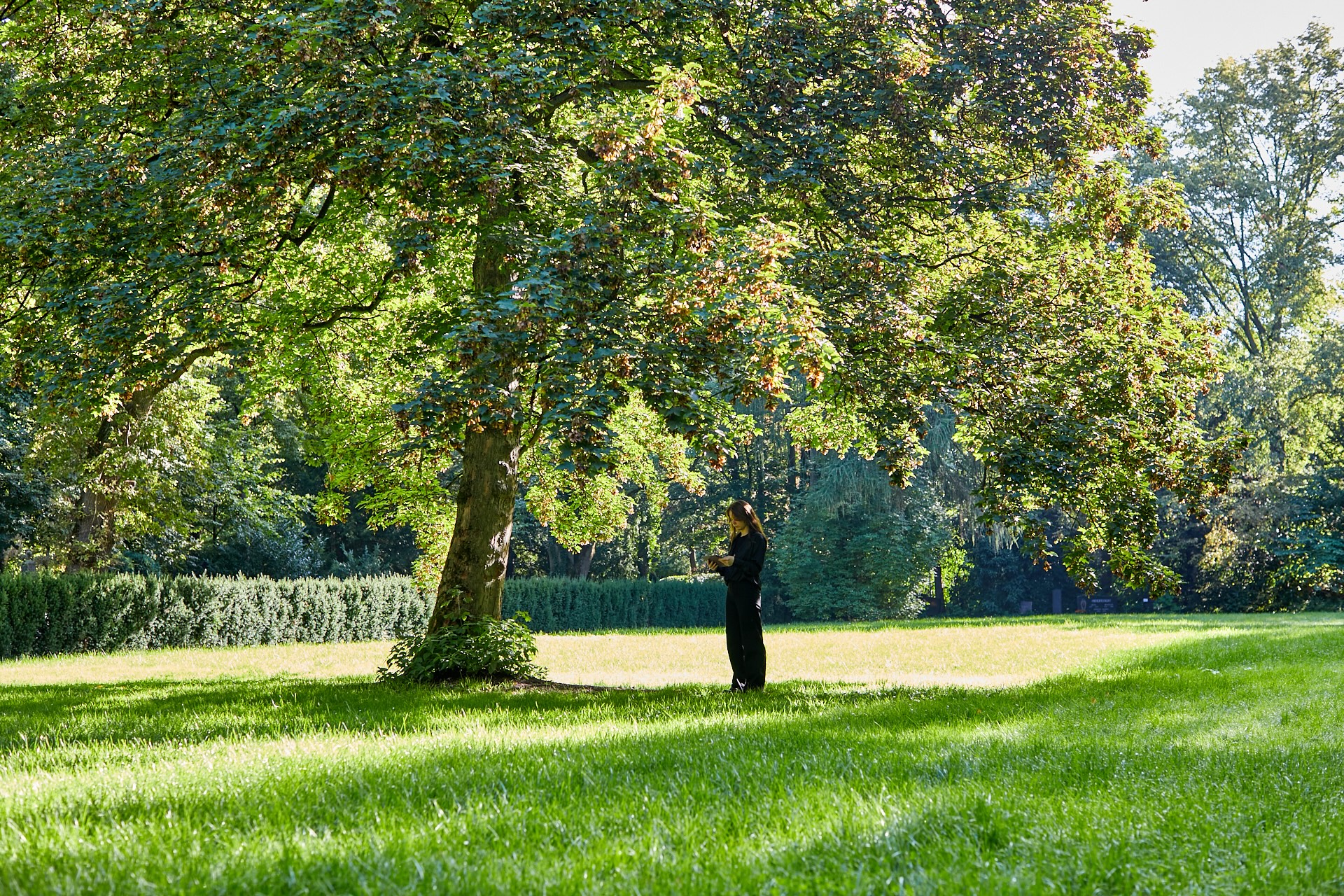
The pg_baum mobile application can be integrated into a digital cemetery plan or used independently of the cemetery plan. Trees are recorded with a unique designation and relevant data such as tree species, age, condition and potential damage are stored in the system. Tree inspectors record conspicuous features, potential hazards or necessary measures directly on site via the app. For example, they can document when a tree crown needs to be pruned or a rotten branch needs to be removed.
From recording to implementation: automated processes for improved efficiency
In addition to monitoring, pg_baum enables systematic tracking of measures. The identified maintenance measures can be transferred directly into the system as tasks. If there is an acute need for action, a high-priority task can be created with just a few clicks and forwarded directly to the responsible persons or external specialist companies. This ensures that defects that pose a risk to traffic are rectified promptly and that all measures are continuously documented.
All checks carried out are stored in an audit-proof database. This not only increases transparency and traceability for the administration, but also provides legal protection in the event of liability issues.

Holistic approach: Integration of pg_baum into the digital cemetery plan
Many cemetery administrations already use a digital cemetery plan to manage their cemetery more efficiently. pg_baum can be easily integrated into the existing cemetery plan, allowing administrations to integrate their entire tree population into the existing system. This eliminates the need to use separate software solutions. Instead, all relevant objects and administrative processes can be managed centrally in a single platform.
Conclusion
The systematic inspection and maintenance of trees in cemeteries makes a significant contribution to traffic safety. Digital tools help to efficiently document stability checks, identify risks at an early stage and implement the necessary measures in a targeted manner. By integrating these processes into a digital cemetery plan, workflows can be optimized, liability risks minimized and cemeteries maintained as safe places of rest in the long term.
source: Friedhofskultur, 01.07.2025